







Lisa Lugerbauer manages communications at BirdLife Austria. As an enthusiastic birder, she is also regularly out in the field, taking part in mapping work and in the monitoring of breeding birds. This means she is familiar with the birding world not just from a communications perspective, but also through her own observations.
We spoke to Lisa at the BEX, Pannonian Bird Experience, which took place in Austria at the end of April 2026, about the combination of conservation, knowledge, and passion for birding.

Über den Interviewgast:
Lisa Lugerbauer
Lisa Lugerbauer manages communications at BirdLife Austria. As an enthusiastic birder, she is also regularly out in the field, taking part in mapping work and in the monitoring of breeding birds. This means she is familiar with the birding world not just from a communications perspective, but also through her own observations.

In a few sentences, can you tell us a bit about yourself, your love of nature, and what inspires you?
Already as a child, growing up surrounded by a great natural garden, birds had a special place in my heart. Whether I’m actively observing or in the course of my work at BirdLife Austria – I am constantly fascinated by just how diverse and impressive the bird world is. At the same time, I’m noticing a decline in bird populations in my local area, and even the disappearance of certain species, which inspires me to act on their behalf.
What I find particularly beautiful is the way that birds bring people together across all age groups, genders, and backgrounds.
Thinking about your most important equipment, what role do binoculars play in comparison to other tools?
Binoculars have the advantage of fitting in almost any bag, allowing a few minutes of birding wherever you go – and a few minutes to decompress, too. SWAROVSKI OPTIK’s NL Pure 10x32, for example, offers great handling, sits comfortably in your hand, and feels unbelievably light.
What essential features do binoculars need for professional use?
I find high light intensity particularly important as I enjoy going out for an evening bike ride on the Danube Island after work – and I want to be able to see clearly even in fading light.
Are there any situations where the quality of optics has made a crucial difference?
The great thing about birdwatching is that you can do it without expensive equipment – optics are not an essential requirement. However, good optics play an important role, for example, when identifying water birds at long distances or differentiating between so-called “twin species.” Usually, I can pick out a treecreeper even without binoculars. But to spot the difference between a Eurasian and a Short-toed Treecreeper, I need good optics – unless the bird is particularly cooperative and lets me observe close-up for a long time.
What features do you particularly appreciate in the field – light intensity, sharpness, ruggedness, ergonomics? And why?
As well as light intensity, I place great importance on ergonomics – especially for birding trips, when you’re on the move all day from morning to evening. Your binoculars need to feel comfortable to hold, and of course they can’t be too heavy, as you’re usually carrying a lot around with you, in my experience.
Why is distance so important when observing nature – particularly in conservation?
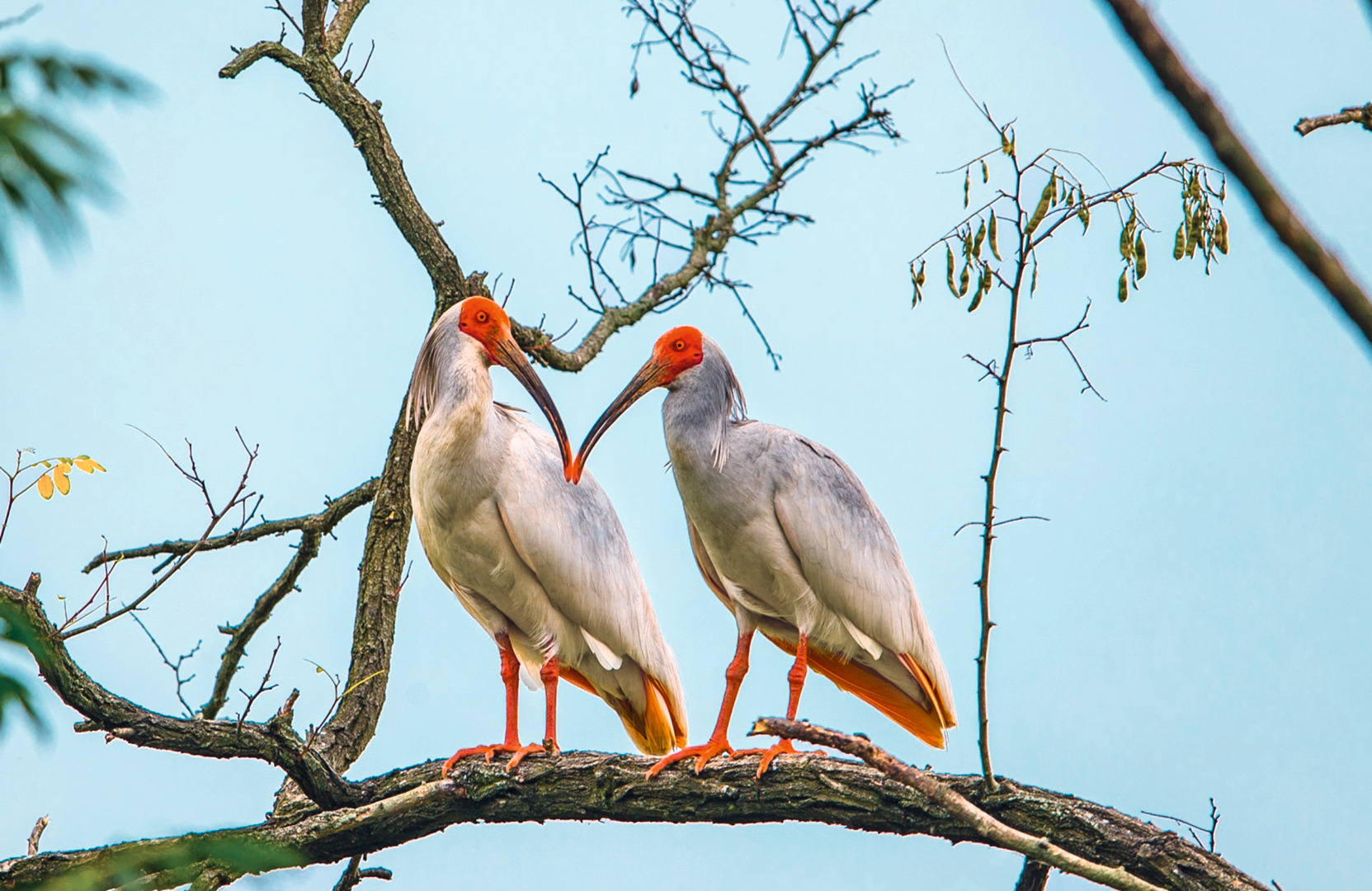
Birds often change their behavior when they’re being observed – in the worst case, they might feel threatened and abandon their nest or their chicks, which then become easy prey for predators and might die. So, it’s extremely important to respect birds and not get too close. Binoculars allow you to easily maintain the required distance without missing out on the observation experience. But if even this disturbs the birds, the golden rule is: back off immediately!
In what way does good equipment contribute toward protecting animals rather than influencing them?
BirdLife Austria is a scientific association that carries out extensive monitoring work. We record bird populations as precisely as possible in order to understand how and where effective protection measures can best be implemented. High-quality optical equipment plays a crucial role – along with good bird song identification skills. Particularly when observing water birds, spotting scopes are essential.
How do binoculars help you make nature “visible” for others?
Occasionally I volunteer to lead excursions for BirdLife and I lend one of my two pairs of binoculars to participants who don’t have their own so that they can observe more easily. This really helps to get people excited about birding as it lets them identify details: for example, the texture of a feather, different beak shapes, or how a favorite bird carries nest material in its beak.
What changes when people observe animals through high-quality binoculars?
Their enthusiasm is easier to ignite!
What are your wishes for the future of conservation and what role does looking more closely play in this?
Our slogan is “We give our birds a voice!” – and I would like to see this “We” grow considerably. The more supporters we have, the more effective bird conservation measures we can implement: from land purchases to maintaining habitat or additional targeted surveys.
If you were asked to give some advice to a young person interested in observing nature, what tips would you pass on?
Make time and head out on your own too! You can observe birds everywhere – even urban environments are home to numerous species, and numbers swell during the migration period. And the more often you’re outdoors, the more sights will appear in front of your lens.


BirdLife Austria
Seeing Birds, Protecting Life
BirdLife Austria is a scientific association that carries out extensive monitoring work. The organization records bird populations as precisely as possible in order to understand how and where effective protection measures can best be implemented. For their field work, high-quality optical equipment plays a crucial role – along with good bird song identification skills.