




Male King Eiders (Somateria spectabilis) are spectacular ducks with contrasting black and white plumage, a misty blue head, greenish cheeks, pale salmon-coloured breast and a striking orange-yellow lobe above their red bill.
A rare sight in the Netherlands
Breeding along the northern coastlines of North America, Greenland and Russia, with lower numbers in northern Scandinavia, the species is more likely to be encountered along the coasts of northwest Europe during winter. Nevertheless, in the Netherlands it remains a rare visitor with fewer than twenty records in the last 45 years. So, when one was reported this summer close to where I was birding, I headed out early to try to find it.
“YOU SOMETIMES ONLY SEE A BIRD FOR A BRIEF MOMENT, MAKE THAT VIEW COUNT.”
MARK COLLIERThe rising tide brought the group of eiders close to the shore.
As I scanned through the group of ducks, I was looking for one small feature that would give away the presence of the King Eider: the ‘sails’. Unlike Common Eiders, adult King Eiders have two small triangular fins (or ‘sails’) on their back. Most of the eiders were hunched up with their head tucked tightly under their wings, so this was one of the few features visible.
“THERE’S NO COMPROMISE: HUGE, BRIGHT IMAGE AND INCREDIBLE CLARITY.”
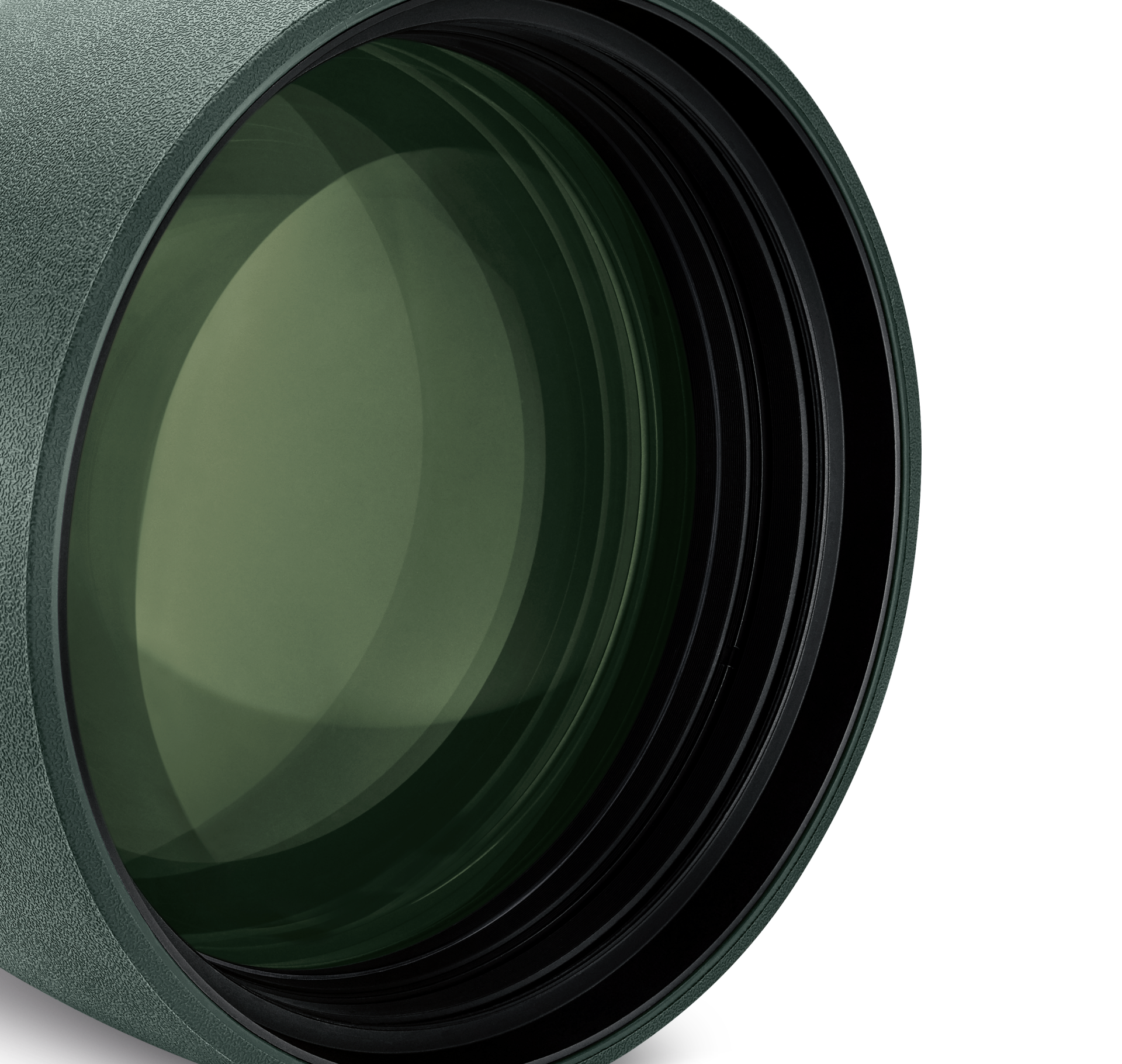
MARK COLLIER ABOUT THE 115-MM OBJECTIVE MODULENow faded and shrunken, the lobe matched the subdued plumage of the bird that seemed to be content hiding amongst the Common Eiders.


The small ‘sails’ of the King Eider were visible at some distance.
Looking closely the yellow bill lobes are just visible even when the King Eider is resting.


The yellow bill lobes and small ‘sails’ reveal the presence of the King Eider.
A male King Eider in eclipse plumage distinguished by the ‘sails’, yellow lobe and bill shape.
Assuming this individual will stay in the area, I’ll try and find him again in autumn when he should again have moulted into his more recognisable breeding plumage.


About the author:
Mark Collier
Mark Collier is an ecologist and dedicated birder. Born in 1976, this British ornithologist loves the outdoors, nature, photography, digiscoping, hiking, climbing, and – of course – birding. His beloved pastime brings him both peace & relaxation as well as excitement & fascination.
You may also follow Mark on social media: Facebook, Instagram, or Twitter.

Uso previsto
Observación de aves costeras
¿Qué necesito para observar aves costeras, marinas y acuáticas?
Telescopios y binoculares prémium que capten toda la luz y la transmitan con un gran aumento hasta el más mínimo detalle. Le facilitarán acercarse a los hermosos petreles de las tormentas que bailan sobre las olas en alta mar o encontrar ese esquivo eider real entre un grupo de eideres comunes.