






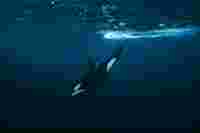


Join biologist Chérine Baumgartner on a journey from a Theoretical Biology lab in Switzerland to the fascinating Norwegian fjords. Studying the genetic and cultural evolution of North Atlantic killer whales means expecting the unexpected, from eavesdropping baleen whales stealing a meal to mysterious pilot whale calves swimming among killer whales. Discover how crystal-clear optics and custom AI tools help decipher complex behaviors and acoustic communication. Dive into the thrilling reality of fieldwork and learn how to turn puzzling field observations into concrete data that can help protect these incredible animals.
Into the Fog
We were enveloped in thick fog, unable to see much beyond the edge of our tiny dinghy, in complete silence. Through the mist, we could hear the sharp exhales of smaller whales mingling with the massive, resonant blows of larger whales.
As the fog began to lift, the scene revealed itself: killer whales, fin whales, and humpback whales were resting all around us. Suddenly, they began to move slowly in the same direction, but then they started to accelerate. Soon, we were struggling to keep up with them in our dinghy. Because visibility was still poor, we couldn't see what had triggered this sudden chase.
Eventually, we spotted birds circling in the distance and black triangular dorsal fins slicing through the water below them. Another group of killer whales was feeding. They had executed a highly coordinated hunt, driving a school of herring from the dark depths of the fjord to the surface. By flashing their white bellies, they had corralled the fish into a dense, panicked bait ball.
But that bait ball didn't last long. For the incoming baleen whales, a tightly packed school of herring at the surface is a nicely prepared meal that can be swallowed in a couple of gulps. The very acoustic signals the killer whales used to coordinate their hunt had acted as a dinner bell for the others. These baleen whales were not seen in these fjords prior to 2010, but they have since established themselves as "eavesdropping kleptoparasites", sneaky thieves tuning into the killer whales' frequency.
Observing events like this opens up a fascinating set of scientific questions that we can now explore in a new study: How often are killer whale feeding events interrupted this way? How much energy does it cost them? And how might they adapt their behavior to evade these massive eavesdroppers?
Expecting the Unexpected
That is the reality of fieldwork: marine ecosystems seem like an endless source of the unexpected. No two days on the water are alike, which ensures we never take a single sighting for granted.
Sometimes the surprises are just subtle shifts in familiar habits; other times, they seem like a complete mystery. Recently, while scanning the horizon off the coast of Iceland for killer whales hunting herring, we instead found a lone, newborn pilot whale calf swimming directly among the apex predators for no obvious reason.
In truth, this is the most exciting part of our work. You observe something in the field, sometimes just once, sometimes over and over, and you are left wondering what exactly is going on. Then, you take those mysteries back to the lab, diving into the data for months on end to work out the biological mechanisms behind what you witnessed. That process of turning a wild, puzzling observation into concrete scientific understanding is what I truly love about my job.
From the Fjords to the Lab
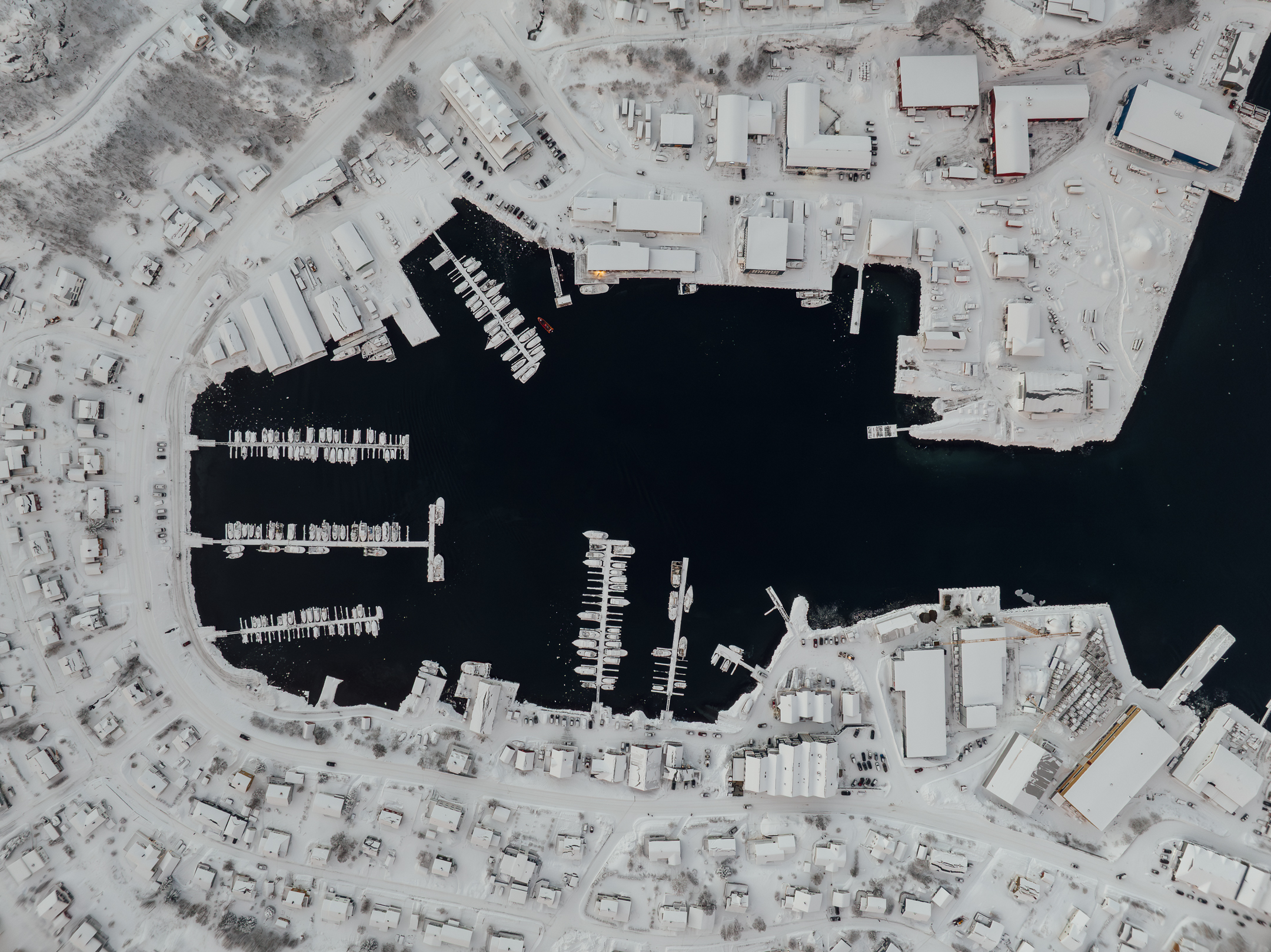
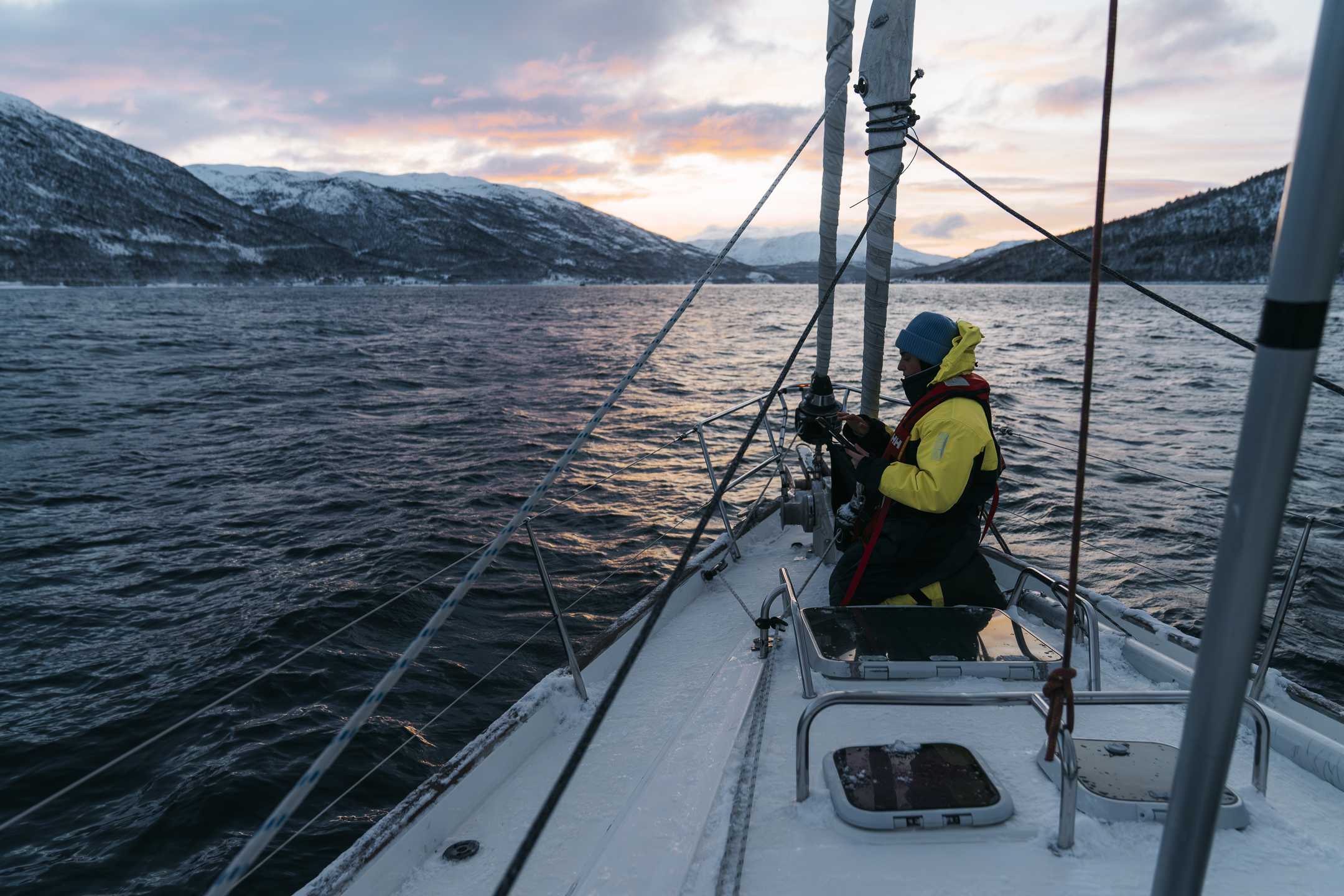
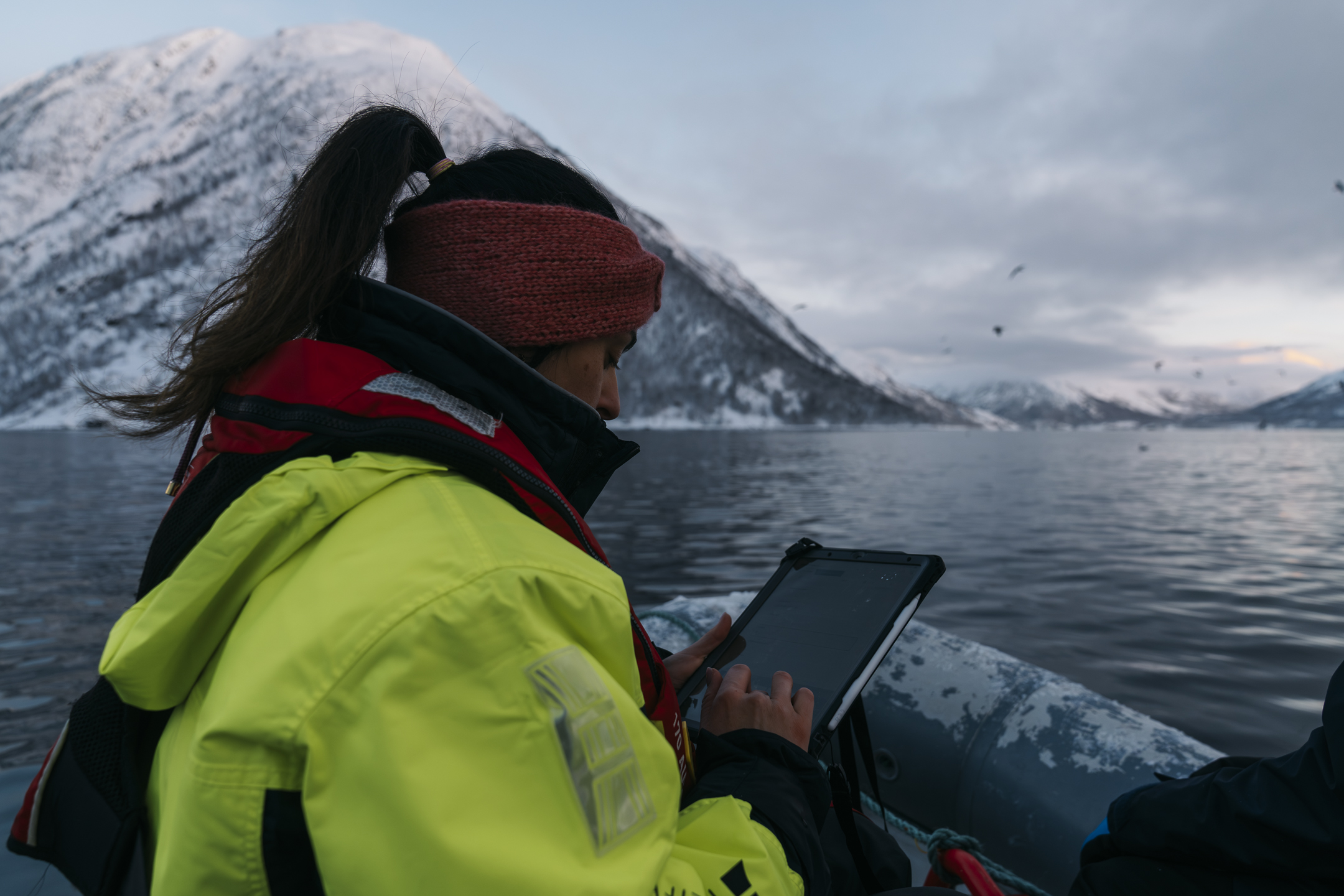
I’m Chérine, currently conducting my PhD research at ETH Zurich, focusing on the genetic and cultural evolution of North Atlantic killer whales. My work bridges two very different worlds: analyzing data at a Theoretical Biology lab in Switzerland and gathering it from the deck of a sailboat navigating Norwegian fjords.
We use genetic analysis to define distinct whale populations, which is a crucial step in establishing biologically meaningful conservation units. By investigating inbreeding across these different groups, we can identify the most vulnerable units and ensure our findings reach the management bodies responsible for their protection.
But there is also so much to learn within these populations. When you view a population purely as a single biological entity, you miss vital ecological insights. By incorporating individual-level data, we can uncover rich cultural and behavioral diversity. Unlocking these insights relies entirely on our incredible collaborators, whose dedication to collecting long-term data in distinct locations worldwide provides the foundation for this kind of work.
Alongside genetics, I am deeply interested in the evolution of their complex communication systems. Deciphering these acoustic networks requires analyzing massive datasets. To handle this, we developed a custom AI tool that is effectively opening up an entirely new world of questions we can now address.
Optics on the Water
Getting here was not a straight line. Growing up landlocked in Switzerland, the ocean felt distant and, if I'm honest, a little frightening. Childhood movies and media had done a good job in portraying its creatures as monsters. Eventually, curiosity outgrew fear, particularly once I started learning about industrial whaling and the shark fin trade. The real story, I realized, was the other way around. That realization sent me toward studying environmental sciences, and once I got into research, I knew it was a natural home for my curiosity about our planet and its wildlife.
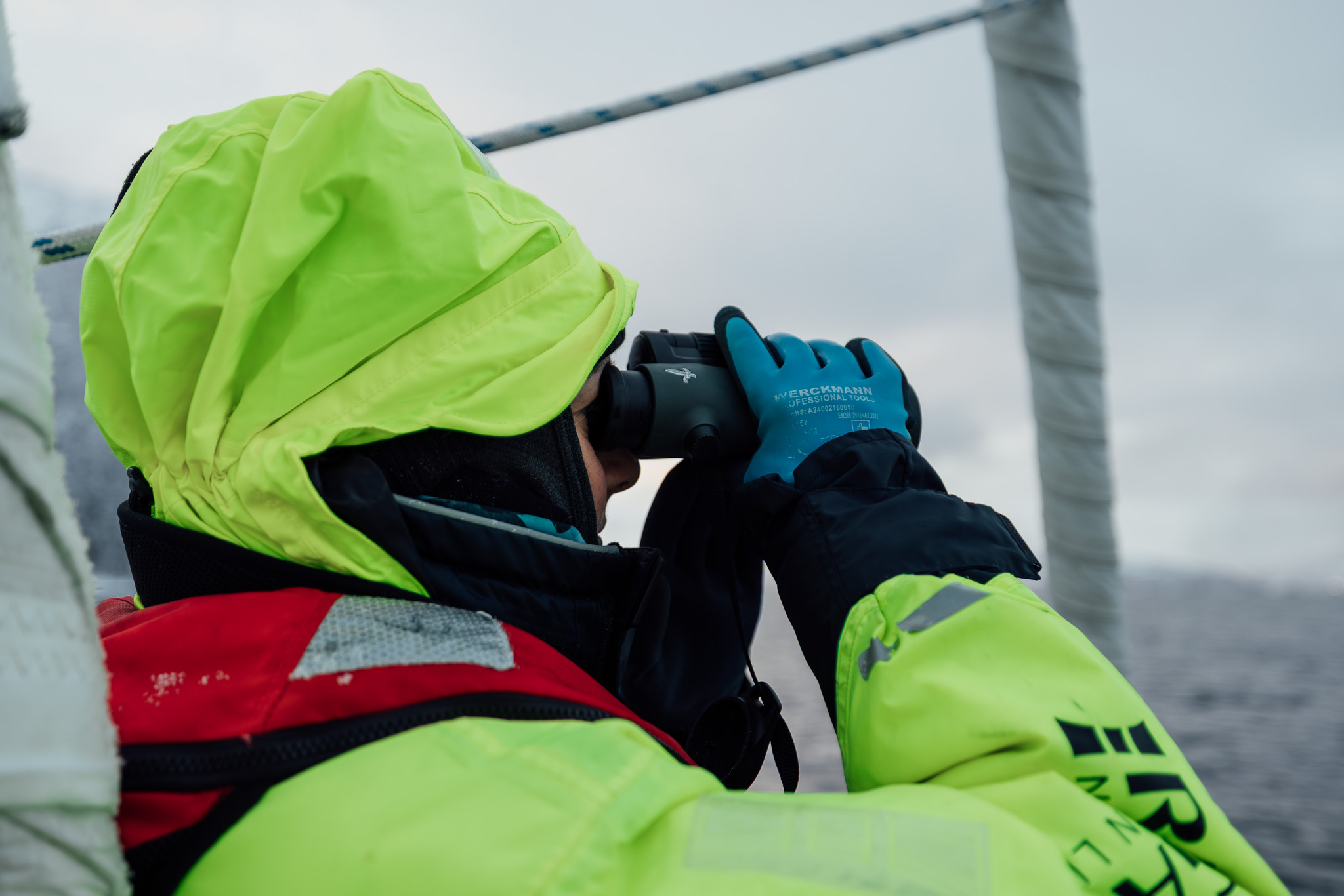
Because we conduct our research from a sailboat rather than a fast motorboat, we keep our environmental footprint small. However, this means we rely heavily on spotting animals from a great distance. This is where our NL Pure binoculars have genuinely transformed our fieldwork. In the short, dim days of the Arctic winter, the clarity of SWAROVSKI OPTIK optics allows us to pick out a distant dorsal fin or a faint blow against the horizon long before standard gear would. It is an essential partnership that we are truly grateful for.

About the author
Chérine Baumgartner
Chérine Baumgartner is currently conducting her PhD research at ETH Zurich, focusing on the genetic and cultural evolution of North Atlantic killer whales. Her work bridges two very different worlds: analyzing data at a Theoretical Biology lab in Switzerland and gathering it from the deck of a sailboat navigating Norwegian fjords. Alongside genetics, she is deeply interested in the evolution of the animals’ complex communication systems.
If you want to follow along with her research, you can find Chérine on Instagram at @cherine.kai and @orcestra_org. Fair warning: you might encounter the occasional unexpected pilot whale calf.
About Orcestra.org
Data alone doesn't protect orcas; we must ensure research findings go beyond the pages of scientific journals. That is why Chérine also founded Orcestra.org (@orcestra_org on Instagram), a nonprofit dedicated to connecting rigorous science with real conservation action.


