Menu
Products
Intended use


Service

Product & Technical Services, Tips & Care, Tutorials, Downloads, Declarations of conformity
About us

Meet us

Events

Stories

All about optics

- Austria
- Belgium
- Bulgaria
- Canada
- Croatia
- Denmark
- Estonia
- Finland
- France
- Germany
- Italy
- Latvia
- Lithuania
- Luxembourg
- Netherlands
- Norway
- Poland
- Slovakia
- Slovenia
- Spain
- Sweden
- Switzerland
- United Kingdom
- United States


Habicht 8x30


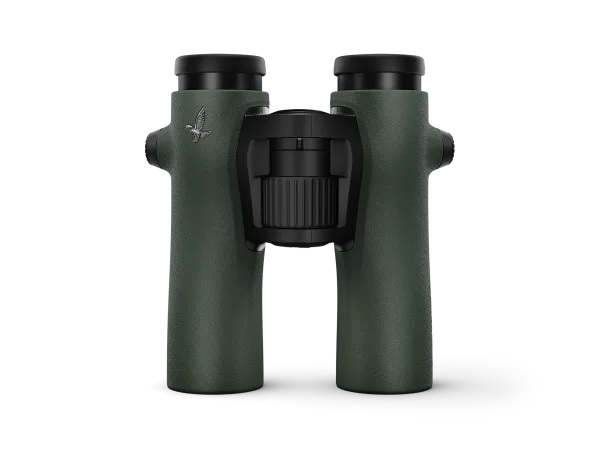
The compact, light Habicht 8x30 model, weighing just 19 oz / 540 g, is a pair of Porro prism, black armored binoculars. These binoculars, which have been tried-and tested for many years, can offer an excellent field of view of 408 ft / 136 m, even with their traditional design.
Recommended by our experts:


This product is currently not available in our online store.
Please note: Local retailer prices may differ.


What to consider when choosing your binoculars
 Objective lens diameter
The objective lens diameter specifies how much light can enter the optics. This makes it a key factor in an instrument’s performance, for example, in twilight. The bigger the objective lens diameter, the more light the objective lens can capture. The darker the surroundings, the larger the objective lens diameter needs to be. Check the precise product name as the number after the ‘x’ specifies the objective lens diameter in millimeters. For example, a device with the suffix 10x42 has an objective lens with a diameter of 42 mm.
 Magnification
The magnification specifies the factor by which an object appears to be closer in comparison with the actual distance. The higher the magnification, the closer the object seems to be. However, a higher magnification also means a smaller field of view. Check the precise product name as the number in front of the ‘x’ specifies the magnification. For example, 10x42 is a device with 10x magnification.
 Field of view
The field of view describes the size of the image section that can be seen through the optics. This is specified either in meters (width) at a distance of 1000 meters (m/1000m), or feet (width) at a distance of 1000 yards (ft/1000 yds), or as an angle (degrees). The higher the magnification, the smaller the field of view.
Binoculars have a large field of view, which means you can see a wide area. Spotting scopes have a higher magnification, which makes the field of view much smaller, but you can see more detail.
Objective lens diameterThe objective lens diameter specifies how much light can enter the optics. This makes it a key factor in an instrument’s performance, for example, in twilight. The bigger the objective lens diameter, the more light the objective lens can capture. The darker the surroundings, the larger the objective lens diameter needs to be. Check the precise product name as the number after the ‘x’ specifies the objective lens diameter in millimeters. For example, a device with the suffix 10x42 has an objective lens with a diameter of 42 mm.
 Shortest focusing distance
The shortest focusing distance specifies how close an object needs to be to see it clearly with the optics. Between this value and infinity, it is possible to focus the image.
- Bag
- Eyepiece cover
- Carrying strap
The compact, light Habicht 8x30 model, weighing just 19 oz / 540 g, is a pair of Porro prism, black armored binoculars. These binoculars, which have been tried-and tested for many years, can offer an excellent field of view of 408 ft / 136 m, even with their traditional design.
Technical specification
Compare products
 Habicht 8x30
Downloads
Spareparts

Reviews
- 14
- 4
- 0
- 0
- 0
I am an experienced birder and have always used Roof prism binoculars. Heard a lot about Porro prisms bins over the years and finally decided to bite the bullet and order a pair of Swarovski 8/30 Habicht mainly because at 550gms they are half the weight of my regular Roof prisms. They arrived about a week ago and sure enough the focus wheel is a little stiff, however this must be Swaro's best kept secret - they are simply a delight, amazing field of view, superb clarity and so diminutive you hardly know you have them around your neck. Once you hit the sweet spot with the focus that wheel stiffness is actually an advantage as its not accidentally moved. --- Well pleased!!
No comment was provided for this review.
Perfect!
image quality.
Recommended by our experts:

 Customer ServiceMon - Fri 8:30 AM - 7:00 PM EST(800) 426-3089info-us@swarovskioptik.com