Menu
Products
Intended use


Service

Product & Technical Services, Tips & Care, Tutorials, Downloads, Declarations of conformity
About us

Meet us

Events

Stories

All about optics

- Austria
- Belgium
- Bulgaria
- Canada
- Croatia
- Denmark
- Estonia
- Finland
- France
- Germany
- Italy
- Latvia
- Lithuania
- Luxembourg
- Netherlands
- Norway
- Poland
- Slovakia
- Slovenia
- Spain
- Sweden
- Switzerland
- United Kingdom
- United States


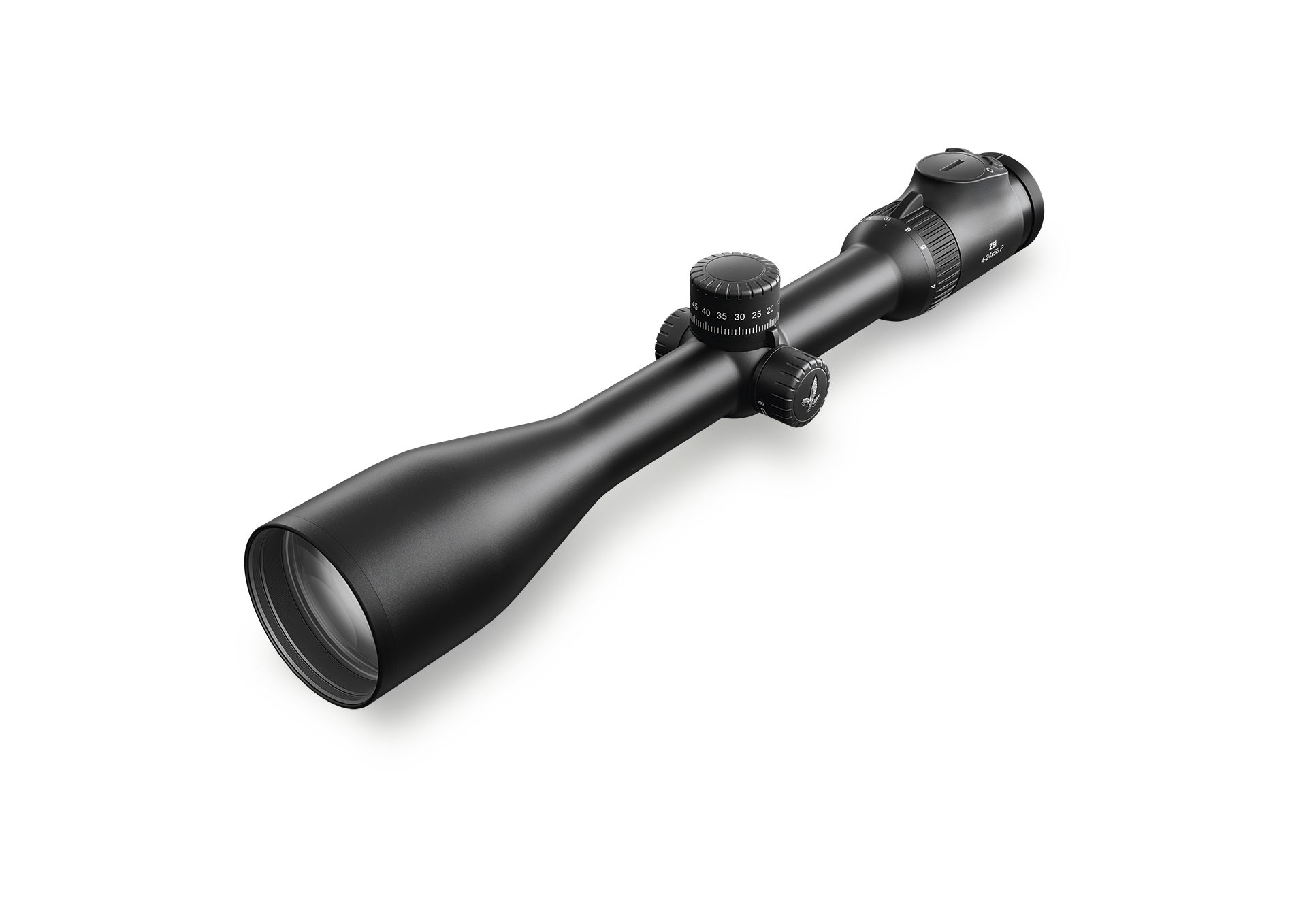
Z6i 4-24x56 P BT


With its 24x magnification and exceptional light transmission, the illuminated Z6i 4-24x56 P BT sets new standards in challenging hunting situations. Be it hide hunting at twilight or in the mountains, the crystal-clear optics, the separately adjustable ballistic turret, and the intuitive handling make this rifle scope incredibly versatile.

Recommended by our experts:


This product is currently not available to order from our online shop. Please contact a local retailer.


What to consider when choosing your riflescope
 Light transmission
 This describes the amount of visible light that can pass through an optical system and is expressed as a percentage. The objective lens diameter specifies how much light can enter the optics. This makes it a key factor in an instrument’s performance, for example, in twilight. The bigger the objective lens diameter, the more light the objective lens can capture. The darker the surroundings, the larger the objective lens diameter needs to be. Check the precise product name as the number after the ‘x’ specifies the objective lens diameter in millimeters. A device with a suffix of 2-16x50, for example, has an objective lens with a diameter of 50 mm.
 Magnification
 The magnification specifies how much closer an object appears to be. The higher the magnification, the closer the object appears and the smaller the field of view. Rifle scopes usually have variable magnification (zoom), e.g. 2-16x. This means it is possible to zoom continuously from 2x to 16x magnification.
 Impact point adjustment
To always be able to aim at the sighting point from different distances, the reticle is adjusted so that the impact point matches the aiming point. The aiming point is the point on the object you want to target. The reticle adjustment in the turrets on the rifle scope is operated using the click settings. Each click changes the impact point.
 Adjustment range
 The adjustment range describes the range within which you can correct the impact point by adjusting the reticle without moving the device. The adjustment range is specified in relation to both the elevation and the windage adjustment.
Depending on the model, the adjustment range is indicated in different units: either as a linear value (m/100 m or in/100 yd) or as an angular measurement in MRAD or MOA. This gives you the flexibility to choose the system you prefer.
Light transmission This describes the amount of visible light that can pass through an optical system and is expressed as a percentage. The objective lens diameter specifies how much light can enter the optics. This makes it a key factor in an instrument’s performance, for example, in twilight. The bigger the objective lens diameter, the more light the objective lens can capture. The darker the surroundings, the larger the objective lens diameter needs to be. Check the precise product name as the number after the ‘x’ specifies the objective lens diameter in millimeters. A device with a suffix of 2-16x50, for example, has an objective lens with a diameter of 50 mm.
- Coin opener
- Cleaning cloth
- Graduated ring
Thanks to its 24x magnification, the Z6i 4-24x56 P BT offers an optimal view even at long range.
Exceptional image quality
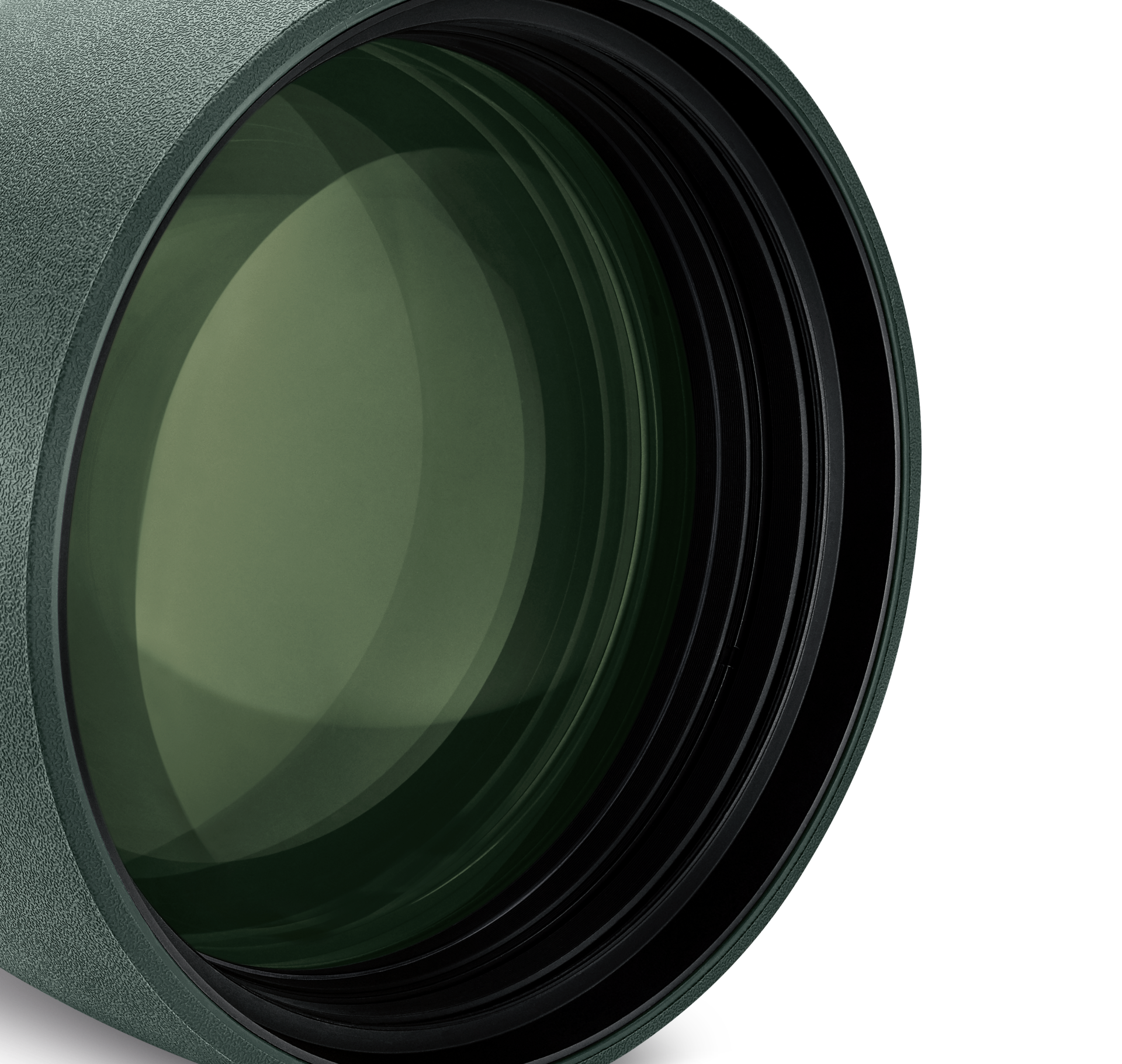
The illuminated reticle delivers a high-contrast and high-definition image – suitable for both hide hunting in twilight and stalking. The precision optics and lateral parallax correction guarantee a faultless image.
Intuitive handling
The modern design features intuitive and quick operation in every hunting situation.
Separately adjustable ballistic turret
The ballistic turret can be adjusted separately and has a practical lock mechanism. It allows you to stay on target at both short and long range.
Technical specification
 4A-I
4A-ICompare products
 Z6i 4-24x56 P BT
Downloads
Customer ServiceMO - TH 8:00 - 17:00 AND FR 8:00 - 12:0000800 3242 5056customerservice@swarovskioptik.com