


PERFECTION MEETS TRADITION


Menu
Products
Intended use
Service

Product & Technical Services, Tips & Care, Tutorials, Downloads, Declarations of conformity
About us
Meet us
Events

Stories

All about optics


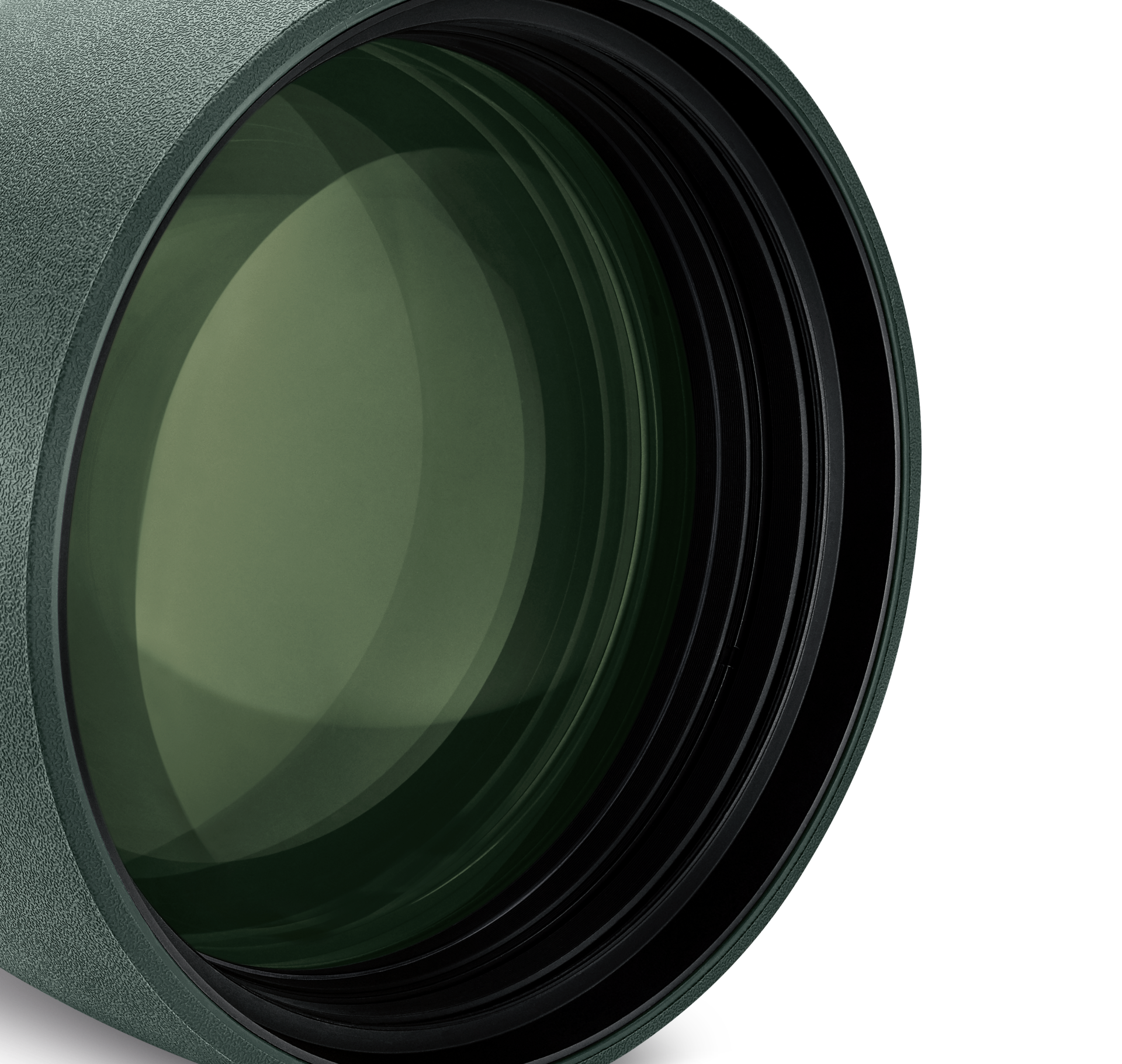
With the high-luminosity SLC 8x56 model, you will benefit from binoculars that offer exceptionally high transmission and you will be thrilled by their optics that have been optimized for night use, with outstanding edge-to-edge sharpness and a large field of view. The extended depressions for improved grip and the balanced weight ensure maximum comfort when using them.


 Objective lens diameter
The objective lens diameter specifies how much light can enter the optics. This makes it a key factor in an instrument’s performance, for example, in twilight. The bigger the objective lens diameter, the more light the objective lens can capture. The darker the surroundings, the larger the objective lens diameter needs to be. Check the precise product name as the number after the ‘x’ specifies the objective lens diameter in millimeters. For example, a device with the suffix 10x42 has an objective lens with a diameter of 42 mm.
 Magnification
The magnification specifies the factor by which an object appears to be closer in comparison with the actual distance. The higher the magnification, the closer the object seems to be. However, a higher magnification also means a smaller field of view. Check the precise product name as the number in front of the ‘x’ specifies the magnification. For example, 10x42 is a device with 10x magnification.
 Field of view
The field of view describes the size of the image section that can be seen through the optics. This is specified either in meters (width) at a distance of 1000 meters (m/1000m), or feet (width) at a distance of 1000 yards (ft/1000 yds), or as an angle (degrees). The higher the magnification, the smaller the field of view.
Binoculars have a large field of view, which means you can see a wide area. Spotting scopes have a higher magnification, which makes the field of view much smaller, but you can see more detail.
Objective lens diameterThe objective lens diameter specifies how much light can enter the optics. This makes it a key factor in an instrument’s performance, for example, in twilight. The bigger the objective lens diameter, the more light the objective lens can capture. The darker the surroundings, the larger the objective lens diameter needs to be. Check the precise product name as the number after the ‘x’ specifies the objective lens diameter in millimeters. For example, a device with the suffix 10x42 has an objective lens with a diameter of 42 mm.
 Shortest focusing distance
The shortest focusing distance specifies how close an object needs to be to see it clearly with the optics. Between this value and infinity, it is possible to focus the image.
PERFECTION MEETS TRADITION
With the high-luminosity SLC 8x56 model, you will benefit from binoculars that offer exceptionally high transmission and you will be thrilled by their optics that have been optimized for night use, with outstanding edge-to-edge sharpness and a large field of view. The extended depressions for improved grip and the balanced weight ensure maximum comfort when using them.
 SLC 8x56
The incredibly great service from Swarovski Optik!
No comment was provided for this review.
Whole process was quick and very easy from ordering to arrival. Very well boxed and packaged, first class quality product Only managed to get out once so far but unbelieveable picture in low light clarity and quality was amazing i know they are not cheap but definately worth it
quality
Customer ServiceMO - TH 8:00 - 17:00 AND FR 8:00 - 12:0000800 3242 5056customerservice@swarovskioptik.com


