Menu
Products
Intended use


Service

Product & Technical Services, Tips & Care, Tutorials, Downloads, Declarations of conformity
About us

Meet us

Events

Stories

All about optics

- Austria
- Belgium
- Bulgaria
- Canada
- Croatia
- Denmark
- Estonia
- Finland
- France
- Germany
- Italy
- Latvia
- Lithuania
- Luxembourg
- Netherlands
- Norway
- Poland
- Slovakia
- Slovenia
- Spain
- Sweden
- Switzerland
- United Kingdom
- United States
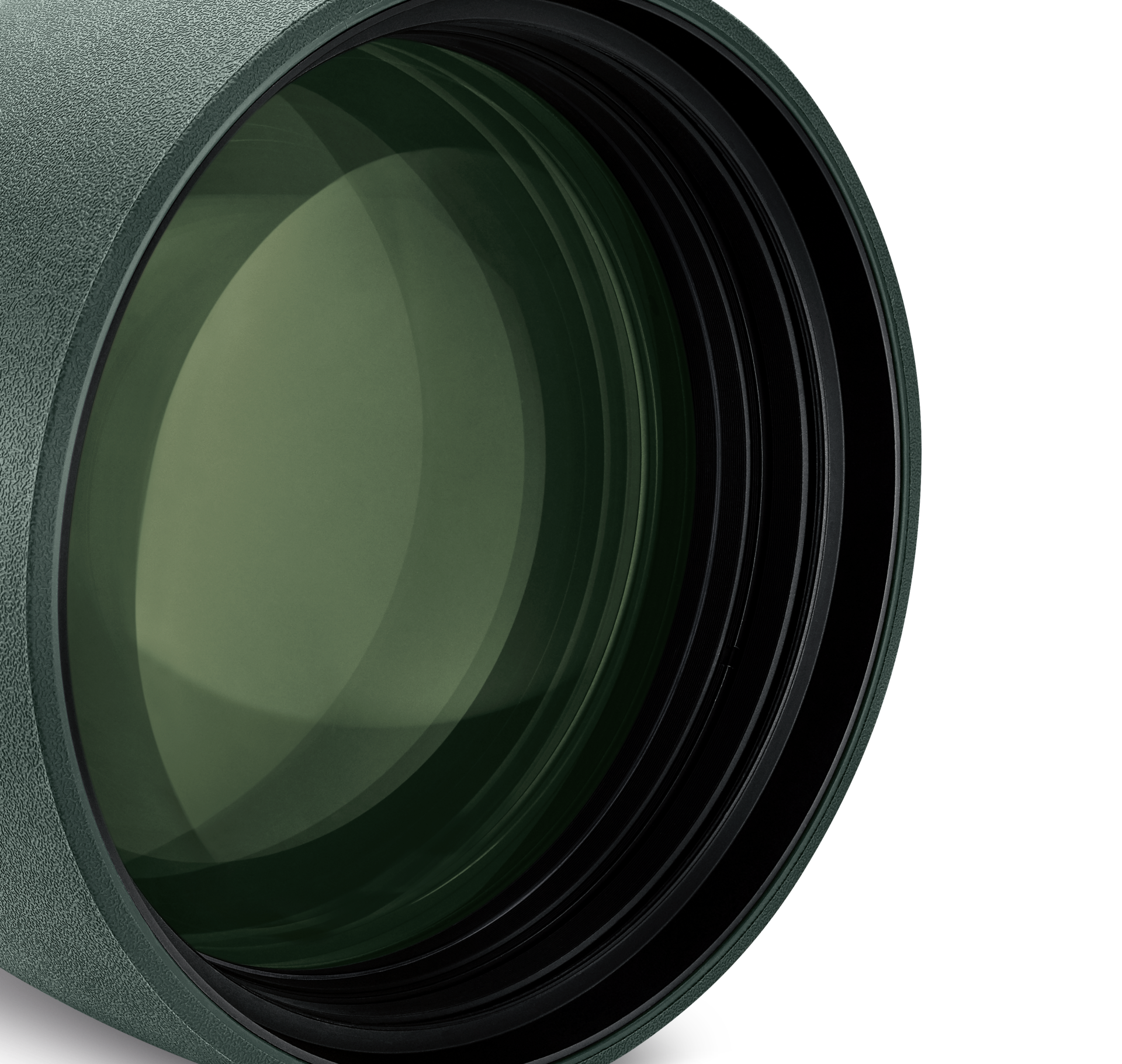
STS objective module
This product is currently not available to order from our online shop. Please contact a local retailer.


What to consider when choosing your spotting scope
 Objective lens diameter
The objective lens diameter specifies how much light can enter the optics. This makes it a key factor in an instrument’s performance, for example, in twilight. The bigger the objective lens diameter, the more light the objective lens can capture. The darker the surroundings, the larger the objective lens diameter needs to be. Check the precise product name as the number after the ‘x’ specifies the objective lens diameter in millimeters. For example, a device with the suffix 10x42 has an objective lens with a diameter of 42 mm.
Objective lens diameterThe objective lens diameter specifies how much light can enter the optics. This makes it a key factor in an instrument’s performance, for example, in twilight. The bigger the objective lens diameter, the more light the objective lens can capture. The darker the surroundings, the larger the objective lens diameter needs to be. Check the precise product name as the number after the ‘x’ specifies the objective lens diameter in millimeters. For example, a device with the suffix 10x42 has an objective lens with a diameter of 42 mm.
 Variable magnification
 Variable magnification makes it possible to adjust the magnification flexibly within a specific range. In contrast to fixed magnification, it allows you to zoom from the lower value to the higher value. However, as the magnification increases, the field of view, i.e. the image section, becomes smaller. Check the precise product name as the number in front of the ‘x’ specifies the magnification. For example, 30-70x95 is a device with a variable magnification from 30x to 70x.
 Field of view
The field of view describes the size of the image section that can be seen through the optics. This is specified either in meters (width) at a distance of 1000 meters (m/1000m), or feet (width) at a distance of 1000 yards (ft/1000 yds), or as an angle (degrees). The higher the magnification, the smaller the field of view.
Binoculars have a large field of view, which means you can see a wide area. Spotting scopes have a higher magnification, which makes the field of view much smaller, but you can see more detail.
 Weight
 The weight specifies how heavy or light the device is (in grams or ounces). Do you intend to do a lot of walking? Lightweight equipment is a priority in this case.
The straight view of the STS 80 is particularly beneficial to those who need to find moving targets quickly. The 80 mm objective lens diameter provides higher detail recognition, while a wider exit pupil ensures brighter images and comfortable viewing even in poor lighting conditions.
Technical specification
Compare products
 STS objective module
Downloads
Reviews
- 2
- 0
- 0
- 0
- 0
60 power is great doesn’t weigh anything but probably should have bought the 80 for a little more reach
No comment was provided for this review.
Recommended by our experts:

 Customer ServiceMO - TH 8:00 - 17:00 AND FR 8:00 - 12:00(800) 426-3089customerservice@swarovskioptik.com